Tulum Sargassum Update: November 2026
Watch the clear Caribbean in front of CASA GITANO this month, and get the real picture of the 2026 season: what the latest reports say, why November is one of the best months, and how to check conditions before you go.
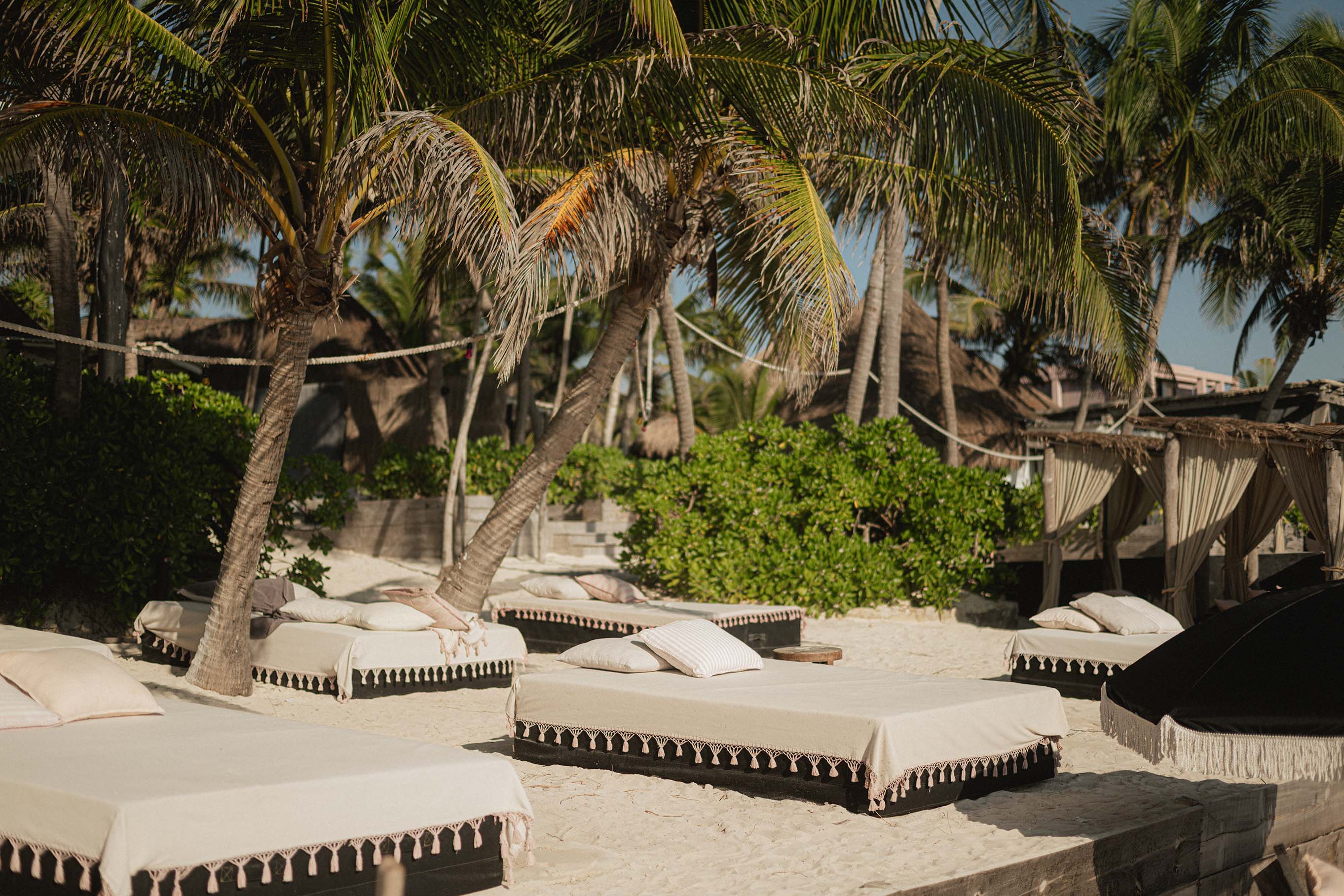
In early November 2026 the Caribbean in front of CASA GITANO in South Tulum is clear and turquoise — watch our reel below. Across Quintana Roo, sargassum has been declining since the record summer peak, but late-October reports still showed moderate arrivals on parts of Tulum's coast, so conditions vary from day to day and beach to beach.
Watch: the sea at CASA GITANO, November 2026
No forecast beats seeing the water with your own eyes. This reel was filmed on our beach in South Tulum in November 2026: white sand, calm turquoise water and the coconut grove behind it.
For more real-time views of the beach, follow @casa.gitano on Instagram, where we share the water as it looks today.
The 2026 sargassum season so far
2026 has been a historic year for sargassum in the Mexican Caribbean. The first large arrivals reached Quintana Roo on January 5 — roughly two months earlier than usual — and by mid-August the state government reported more than 104,700 tons collected at sea and on beaches, with a projection of at least 130,000 tons by year-end, about 35% more than in 2025.
As in previous years, the heaviest period ran from roughly May through August, and Tulum was among the most affected destinations during those months. By early October, Mexico's Navy (SEMAR) rated sargassum levels across Quintana Roo as very low, describing a general downward trend after the summer peak while noting that some areas still received seaweed depending on winds and currents.
What the latest reports say (late October – early November 2026)
- Week of October 26 – November 1: local press citing the regional monitoring network reported a significant arrival in Tulum, with most of its beaches rated moderate (yellow) and four rated minimal (green).
- November 3: satellite-based offshore tracking showed floating sargassum covering about 0.3% of open water near the Riviera Maya and Tulum — a low reading.
- November 4: statewide reports still list some zones of Quintana Roo with abundant or excessive arrivals, which is a reminder that the coast does not behave as one single beach.
The takeaway: November conditions are far better than in summer and many days are completely clear — like the one in our reel — but sargassum has not disappeared from the Caribbean, and experts now expect it to be present in some amount year-round.
Why November is one of the best months for Tulum
November historically opens the lowest-risk sargassum window, which typically runs through February. It also brings the end of the rainy season, softer temperatures, warm water and fewer visitors than the Christmas and New Year peak. For South Tulum in particular, it is the month when the beach, the jungle and the Sian Ka'an Biosphere Reserve are at their most enjoyable.
If you are comparing months, our guide to the best time to visit Tulum breaks down weather, sargassum risk and crowds month by month.
How to check sargassum before you go
- Look at the daily traffic-light map. The Red de Monitoreo del Sargazo de Quintana Roo and SEMAR publish beach-by-beach ratings from green (minimal) to red (excessive).
- Check satellite trackers for offshore mats that could reach the coast in the next few days.
- Ask the hotel. Email casa@gitano.com or send a DM to @casa.gitano and ask how the beach looks that day.
- Go early. Mornings are usually the calmest and clearest time on the beach.
Stay where the jungle meets the sea
Book direct and receive the CASA GITANO Experience: your fourth night complimentary, dinner for two at GITANO JUNGLE, a mezcal welcome ritual and late check-out.
Check availabilityPlan B: a perfect day even if seaweed arrives
Sargassum is part of life in the Caribbean, and a day with seaweed on the shore can still be a great day in South Tulum:
- The pool on the sand. Our black-concrete oceanfront pool is the largest set directly on Tulum's beach — sea views without stepping into the water.
- A cenote nearby. A hidden cenote is within walking distance of the hotel.
- Sian Ka'an. Float the ancient Maya canals at Muyil or spot dolphins and turtles on the lagoons — see our Sian Ka'an guide.
- GITANO Shala. Yoga, sound healing, ice baths and cacao ceremonies in the coconut grove — explore wellness at CASA GITANO.
- Long lunch at GITANO BEACH, with mezcal under the palapa and live music Thursday to Sunday.
Tulum sargassum FAQ
Is there sargassum in Tulum in November 2026?
Arrivals have dropped sharply since the summer peak, and the water in front of CASA GITANO was clear in early November, as our reel shows. Regional reports from late October still rated many Tulum beaches as moderate, so conditions change from day to day and from beach to beach. Check the daily monitoring reports before you go, or message us for a same-day look.
When is sargassum season in Tulum?
Sargassum can arrive at any time of year, but heavy arrivals are concentrated roughly from May to August or September. November through February is usually the lowest-risk window. In 2026 the season started unusually early, in January, and set a record for volume.
What is the best month to visit Tulum without sargassum?
November through February historically offers the lowest sargassum risk, combined with drier, cooler weather. November and early December are a sweet spot: lower sargassum, the end of the rainy season and fewer crowds than the holidays. See our month-by-month guide.
Is sargassum dangerous for swimmers?
Floating sargassum in the water is not toxic to touch, but large piles that decompose on the sand release hydrogen sulfide, which smells like rotten eggs and can irritate people with respiratory sensitivity. On days with heavy arrivals, a pool, a cenote or an inland excursion is the more comfortable choice.